Student Portfolio And Other Resources
Here you’ll find a collection of resources about my work, education tools and all around helpful information.
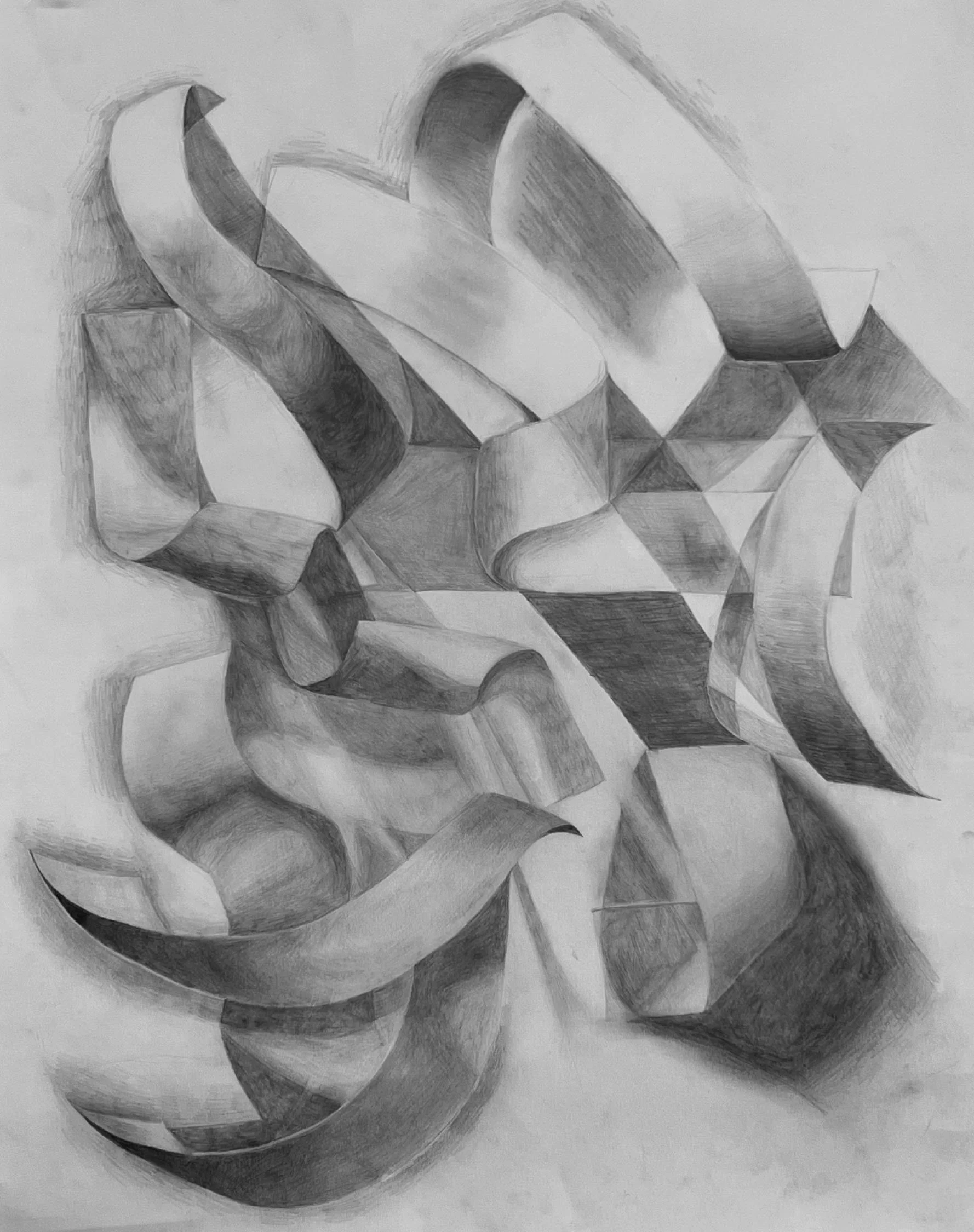
Drawing 1, UNF 2022
Graphite on paper
Student Work Portfolio
This page features selected examples from my teaching portfolio across courses in 3D Design, 2D Design, and Drawing I. The work presented reflects my experience teaching foundational studio courses, including my time as a Teaching Assistant at the University of Kentucky and as an Adjunct Instructor at the University of North Florida. These examples highlight student learning outcomes, project development, and my approach to fostering strong technical skills, visual literacy, and creative problem-solving across disciplines.
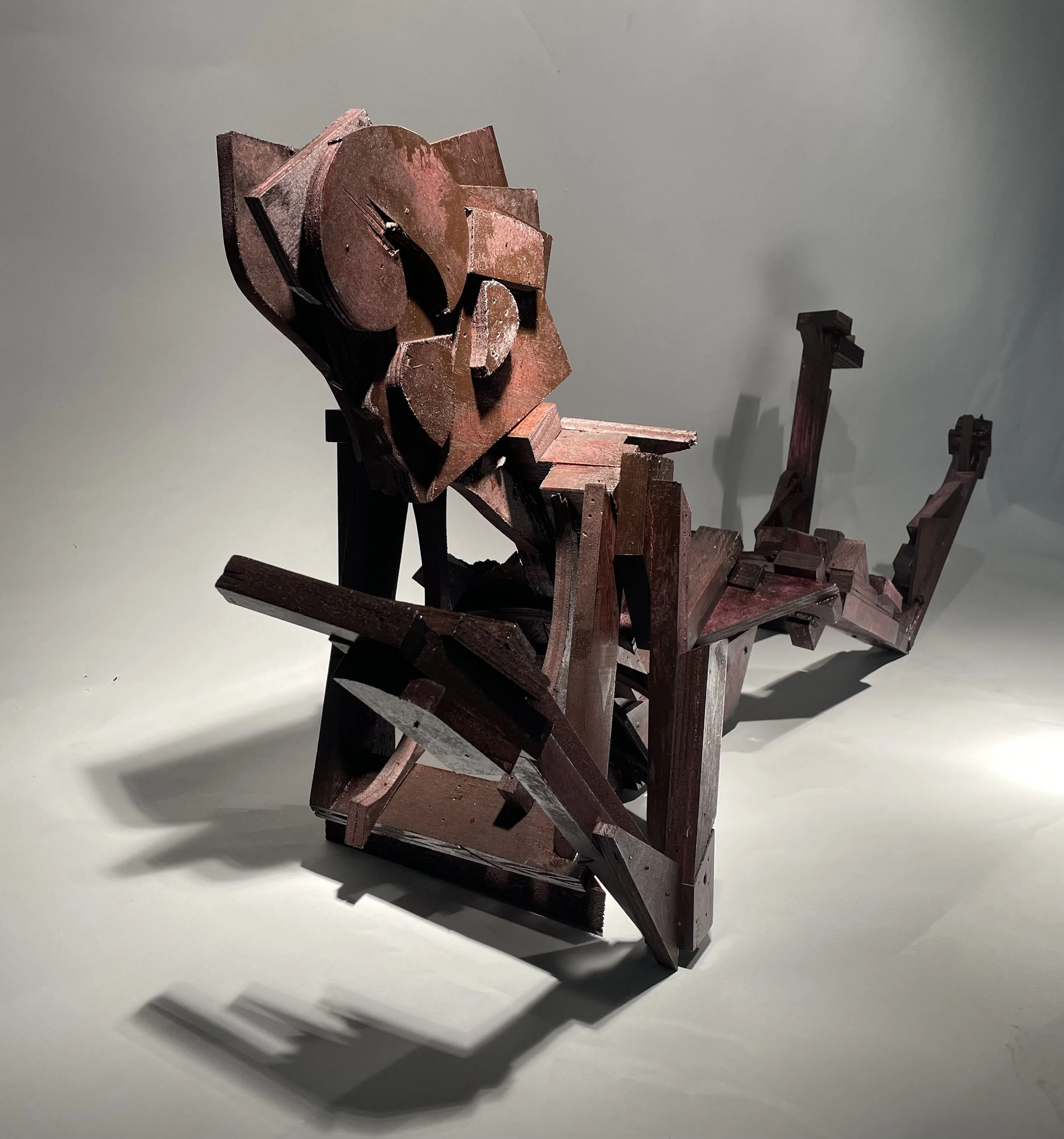
3D Design, UNF 2019, found and repurposed wood, 24”,9”, 12”
3D Design
Foundation courses
University of Kentucky
University of North Florida
2016-2022
This course is a cross-disciplinary studio experience focused on the fundamentals of three-dimensional design and sculptural form. Students investigated the elements and principles of designing in the round through critical discussion, material exploration, and the creation of spatial works. Emphasis was placed on creative problem-solving, spatial awareness, and the development of a thoughtful design process applicable across visual art disciplines.
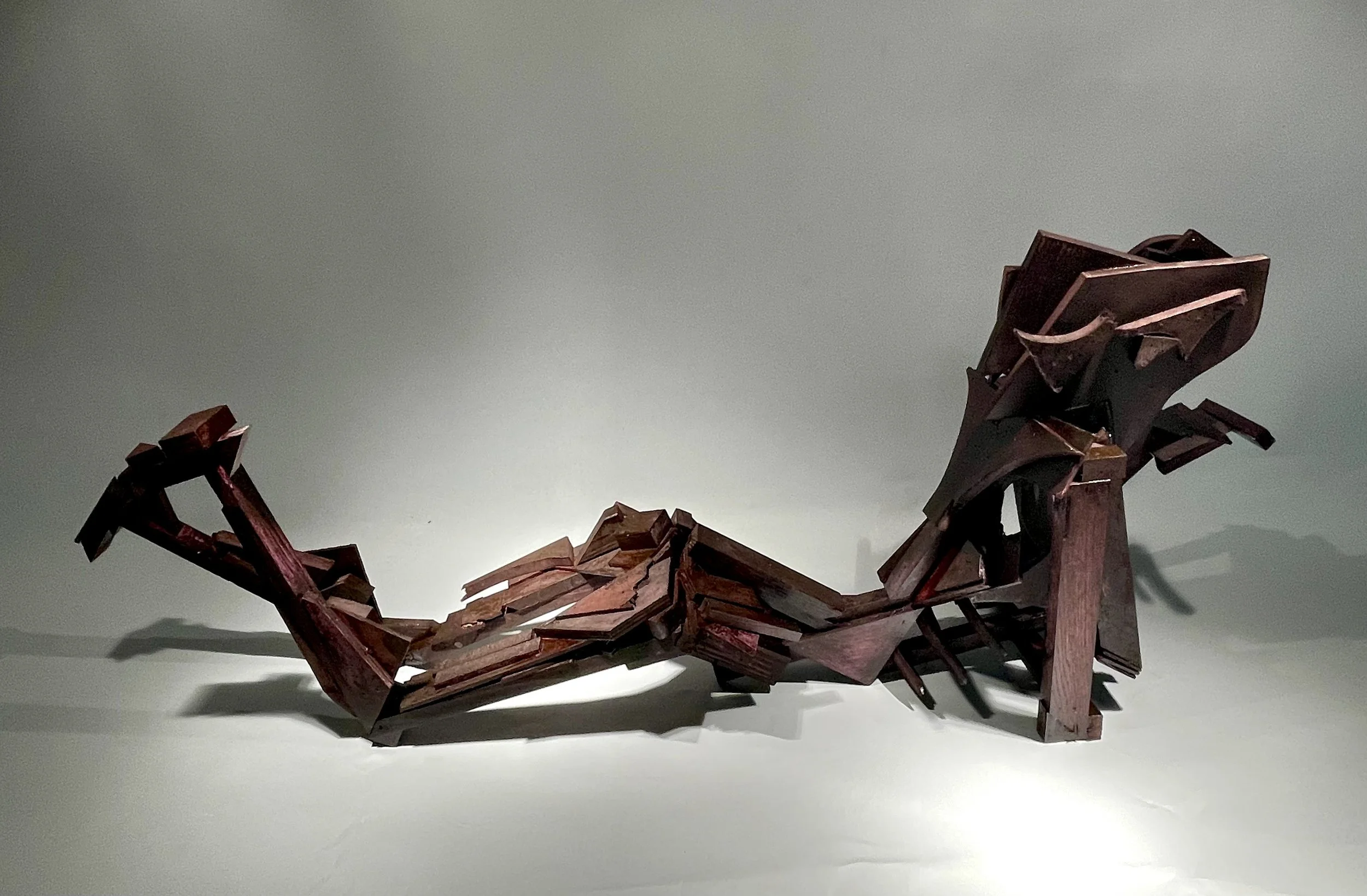
3D Design, UNF 2019 found and repurposed wood. 24” x 9” x 12”
Wood Fabrication: Exploring the figure
In this assignment, students were tasked with creating an abstracted sculptural interpretation of the human figure using found and repurposed wood. The project emphasized material investigation and fabrication processes, encouraging students to explore form through reuse and transformation. Students were also introduced to more advanced woodworking tools and techniques, expanding their technical proficiency and understanding of safe studio practices. The project introduces students to various cutting and Shaping tools. While working in the woodshop, students Become familiar with procedures for planning, fabricating and finishing wood sculptures. This project Is designed to allow students to experiment and play with the material. Avoiding complex shaping and joinery, students use brads and glue to assemble their pieces quickly.
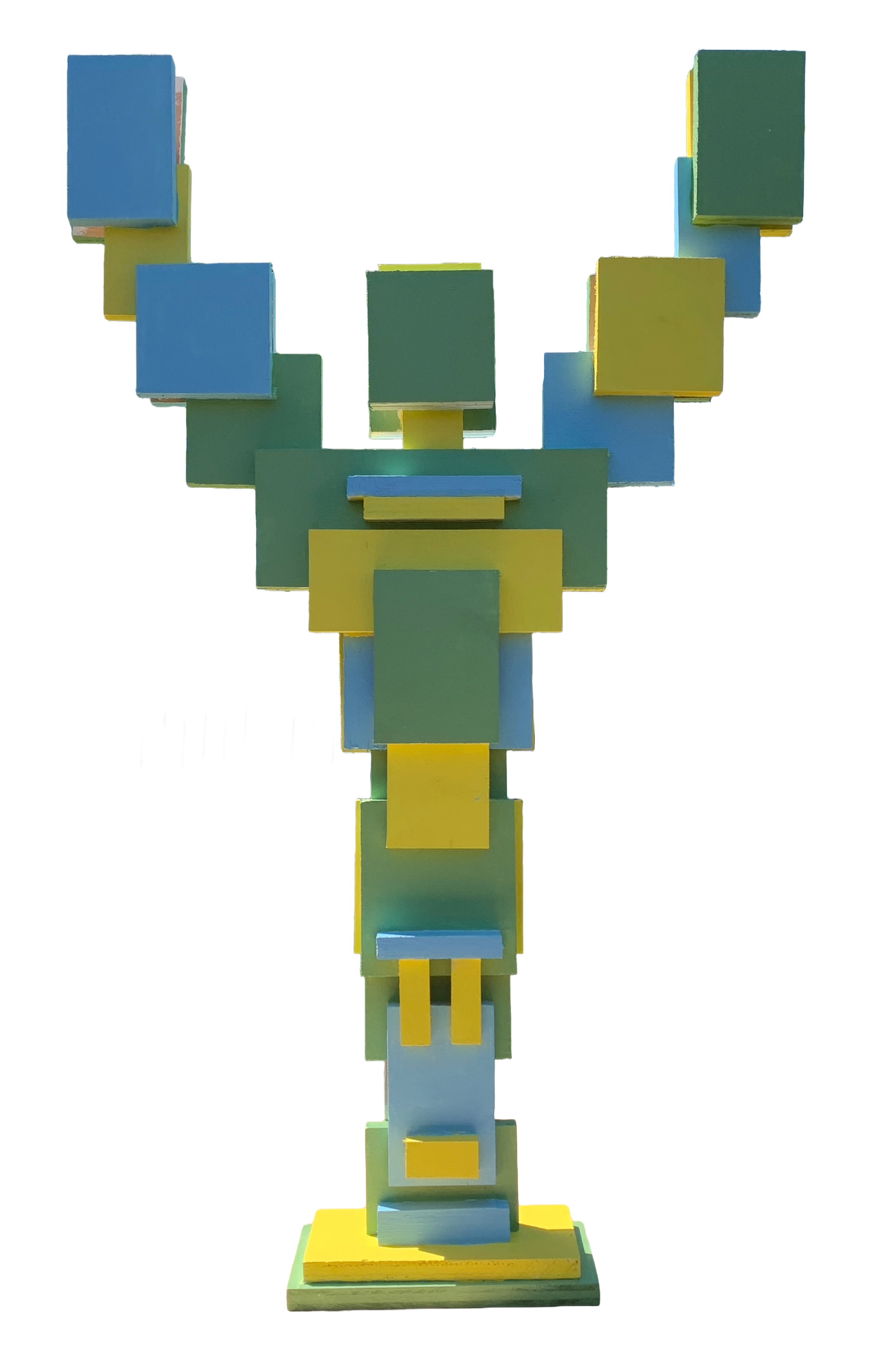
3D Design, UNF, 2019, wood, Acrylic Paint. 16” x 6” x 24”
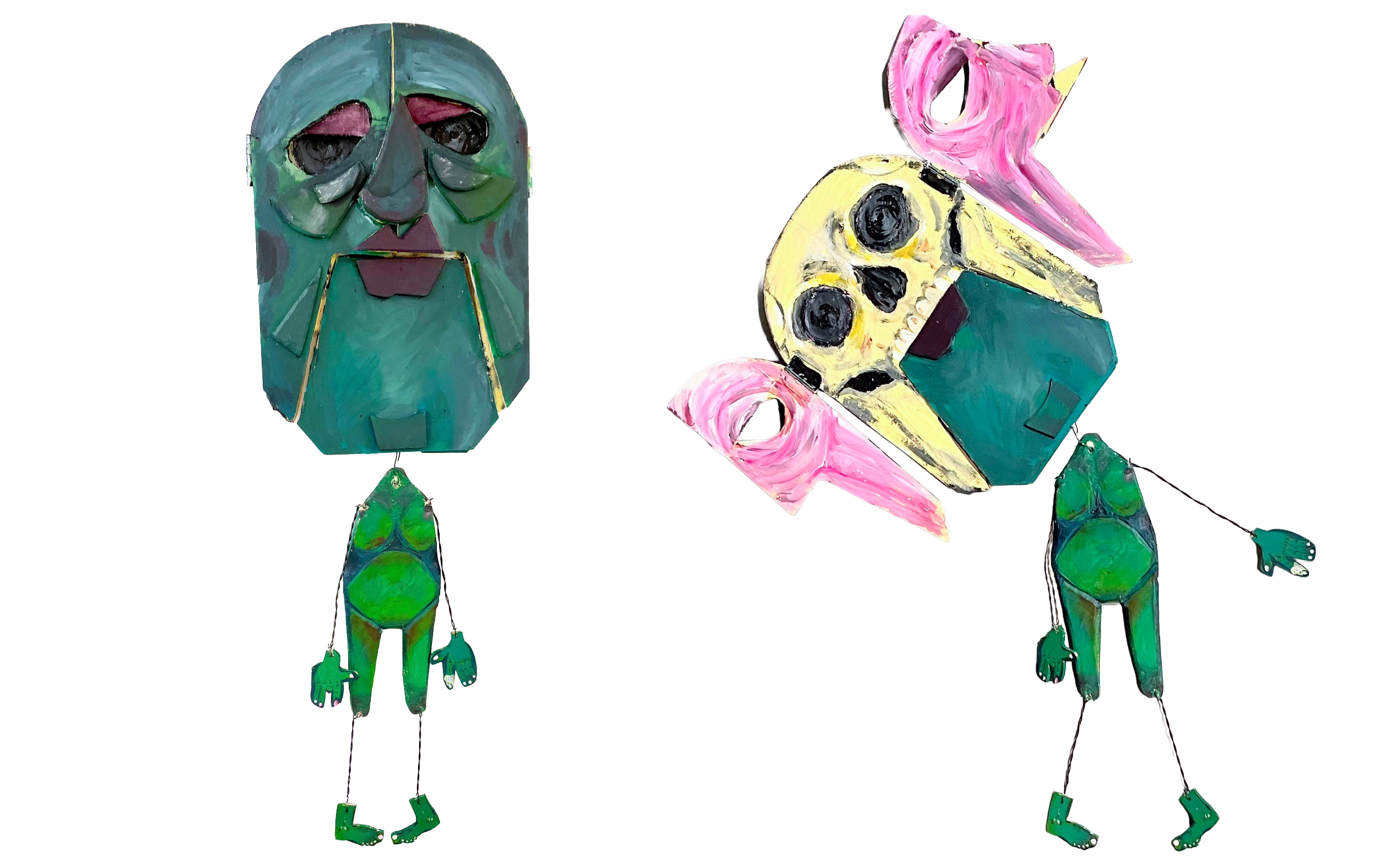
3D Design, UNF, 2019, Mixed media, wood, rebar tie wire, 30” x 12”
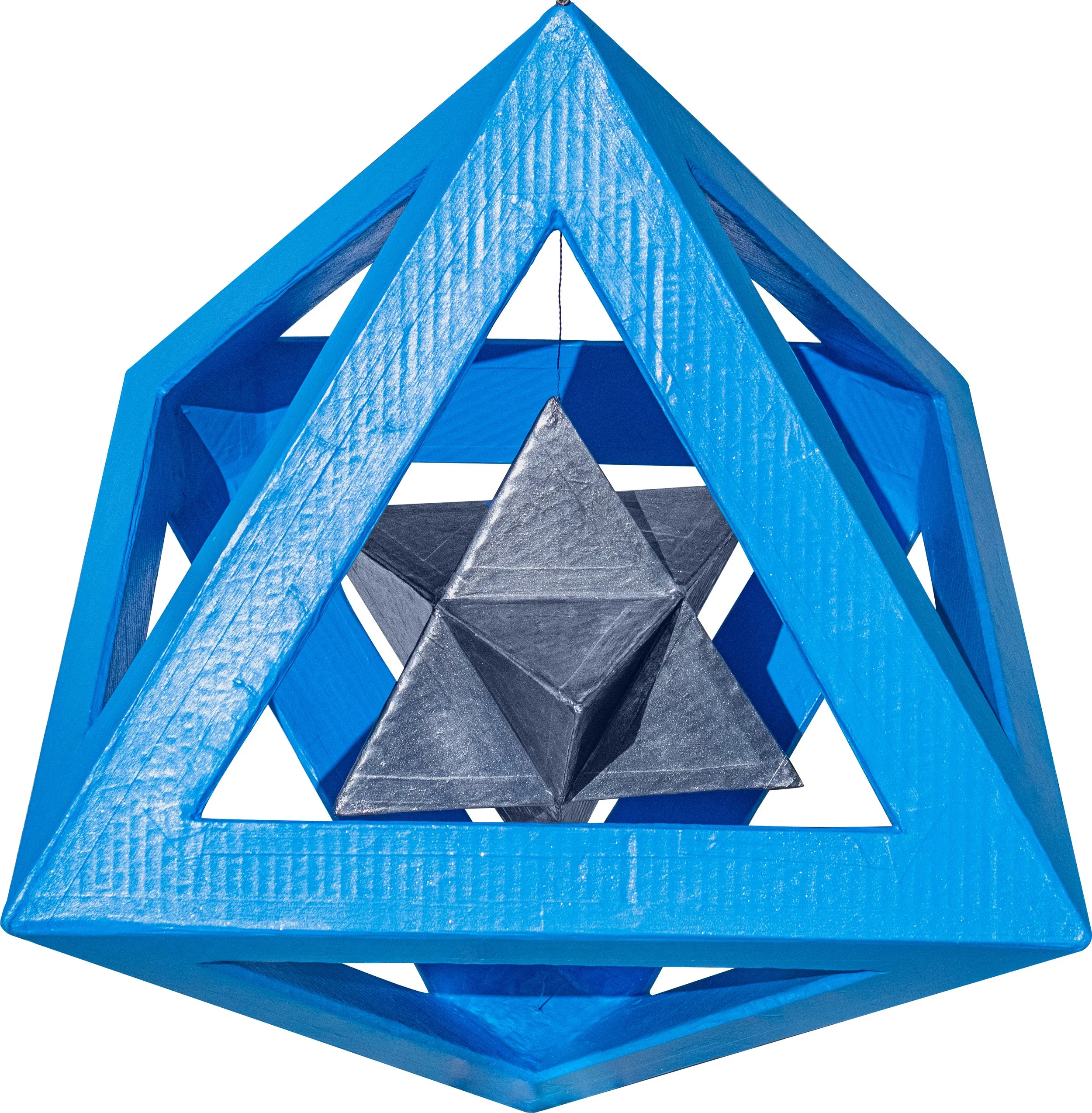
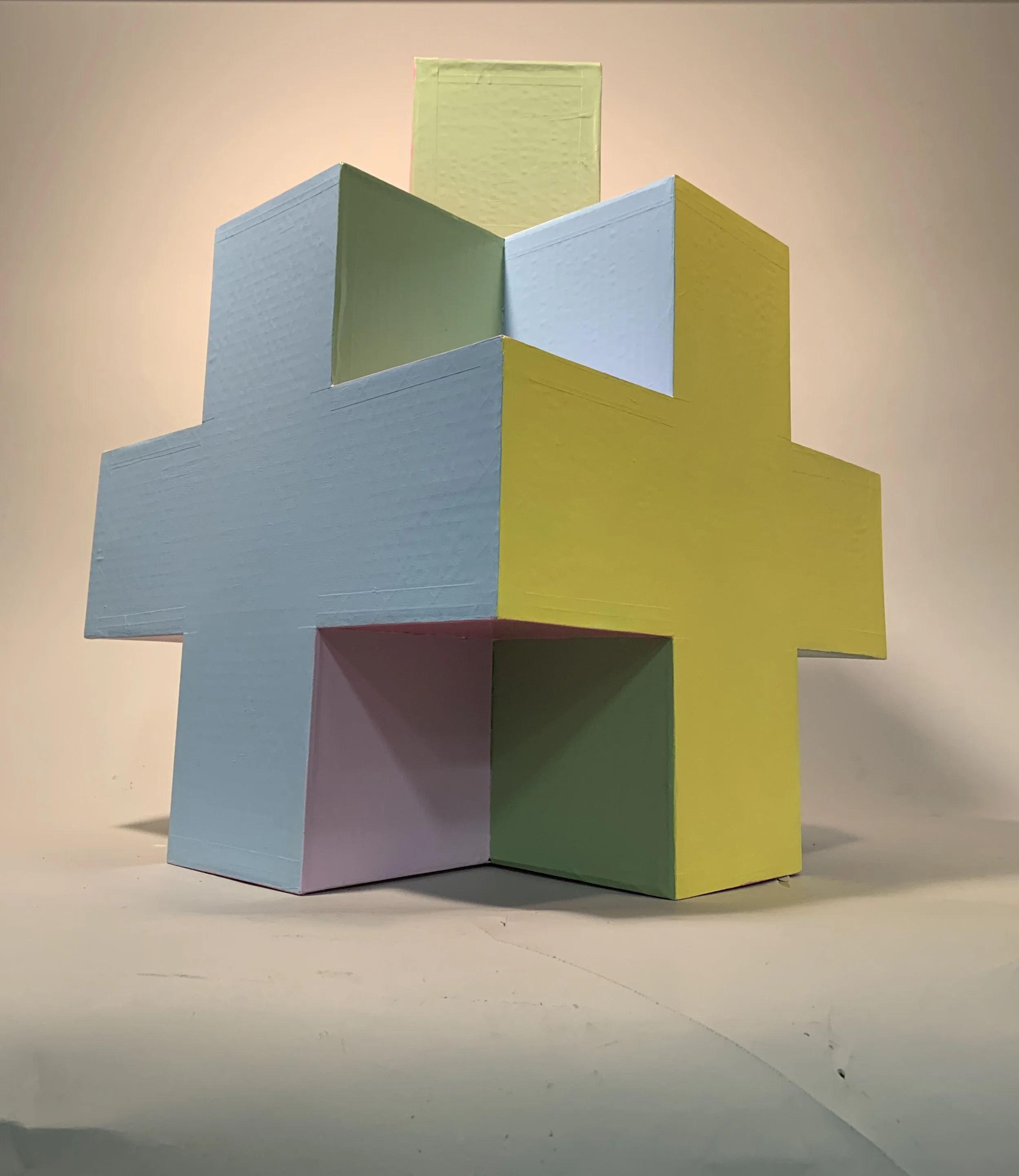
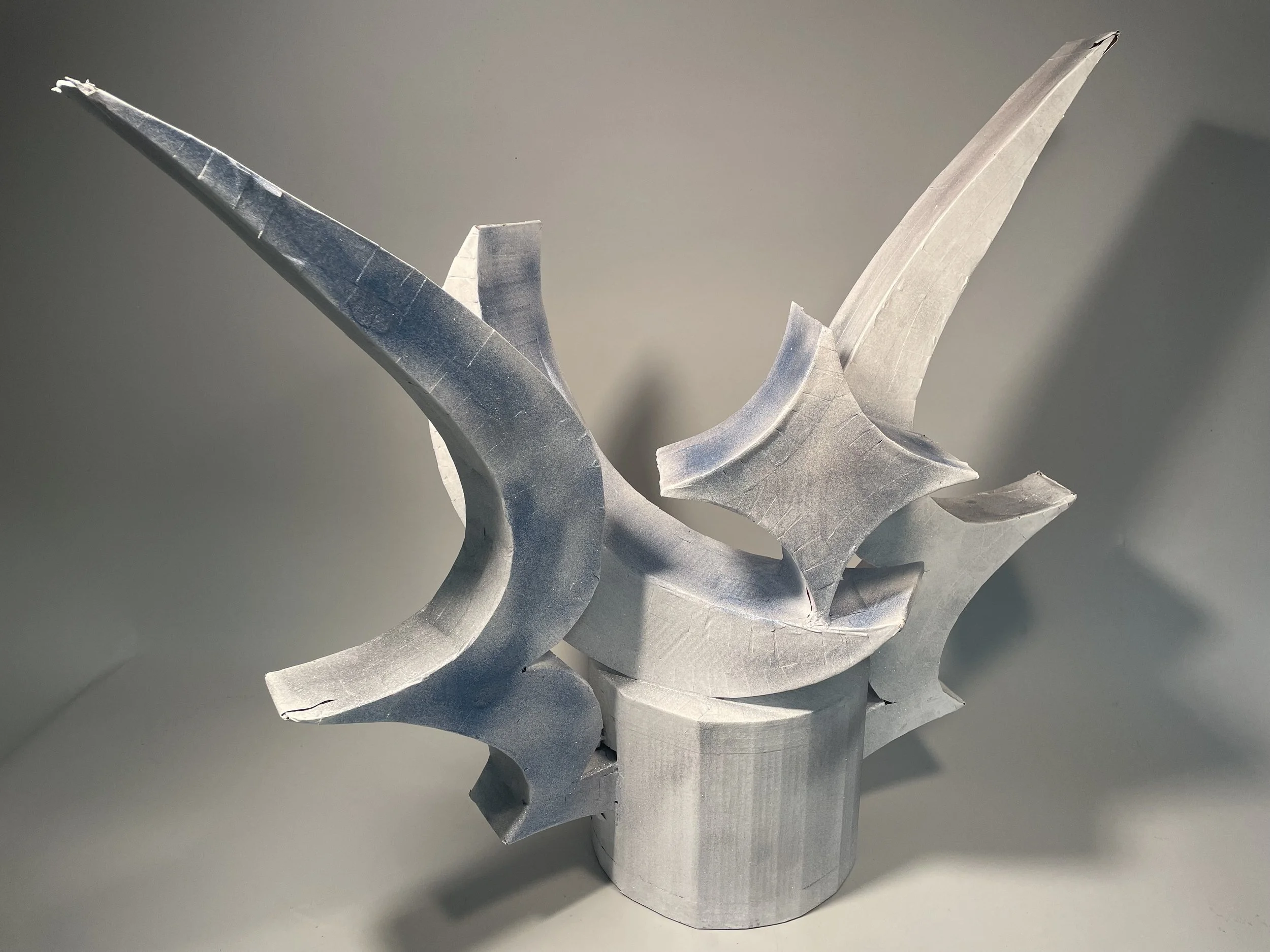
Project Title: Cardboard Fabrication — Volumetric Design with Planar Materials
This assignment introduces students to three-dimensional design through the fabrication of sculptural forms constructed entirely from planar materials. Using cardboard as an inexpensive, accessible, and structurally versatile medium, students will explore strategies for generating volume, mass, and spatial complexity through the assembly of flat surfaces.
The project emphasizes formal problem-solving in three dimensions, with particular attention to proportion, balance, rhythm, and structural integrity. Students are challenged to transform planar components into cohesive volumetric compositions while considering issues of scale, craftsmanship, and material behavior. Cardboard’s limitations and possibilities—such as rigidity, layering, and joinery—are treated as integral design constraints that inform aesthetic and conceptual decisions.
As part of the design process, students will develop small-scale maquettes to test compositional ideas, structural solutions, and formal relationships prior to full-scale construction. This phase reinforces the use of iterative modeling as a critical planning and visualization tool in sculptural practice.
Through this project, students gain foundational experience in fabrication methods, spatial thinking, and the translation of two-dimensional materials into three-dimensional form, establishing essential skills for future work in sculpture, installation, and spatial design.
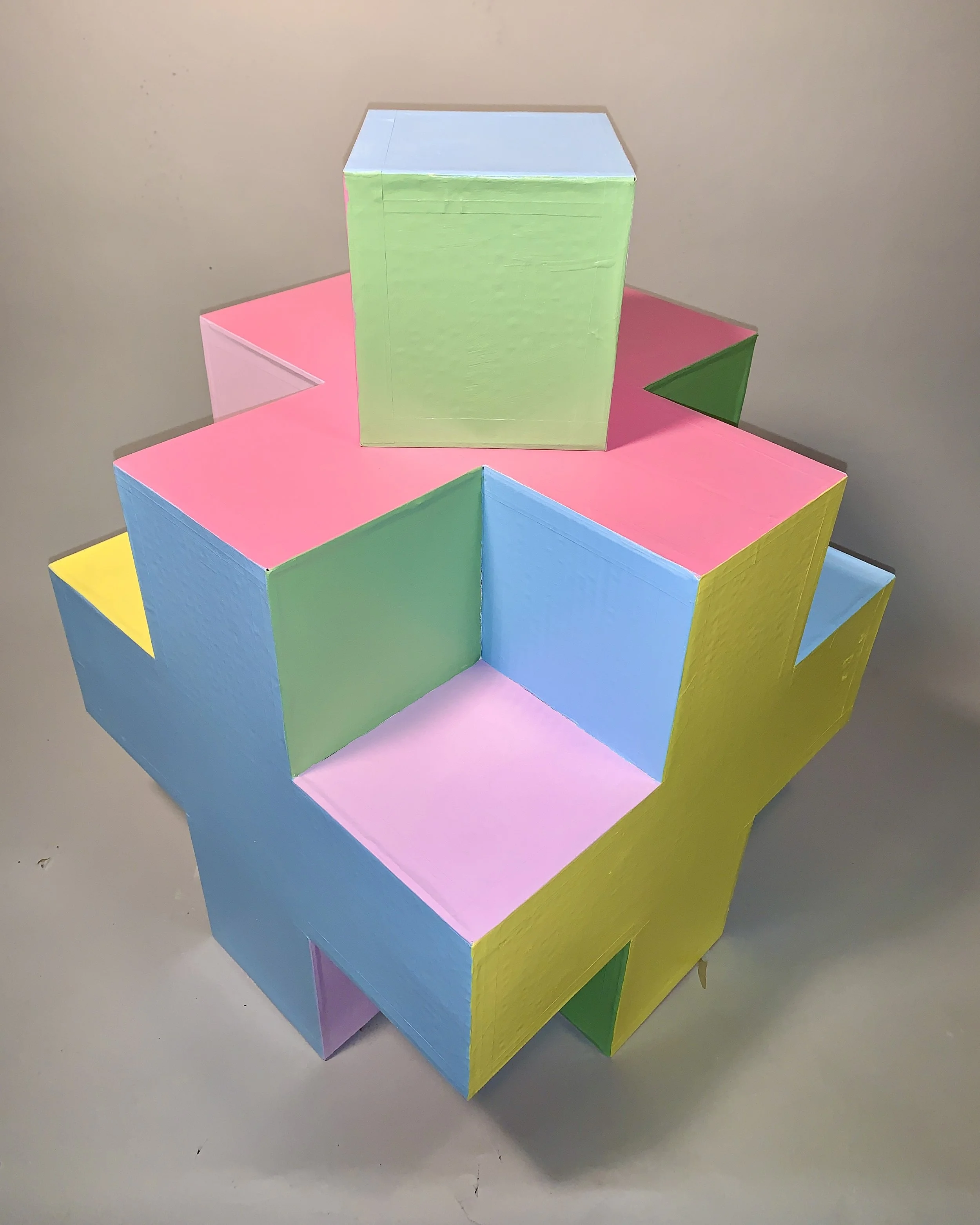
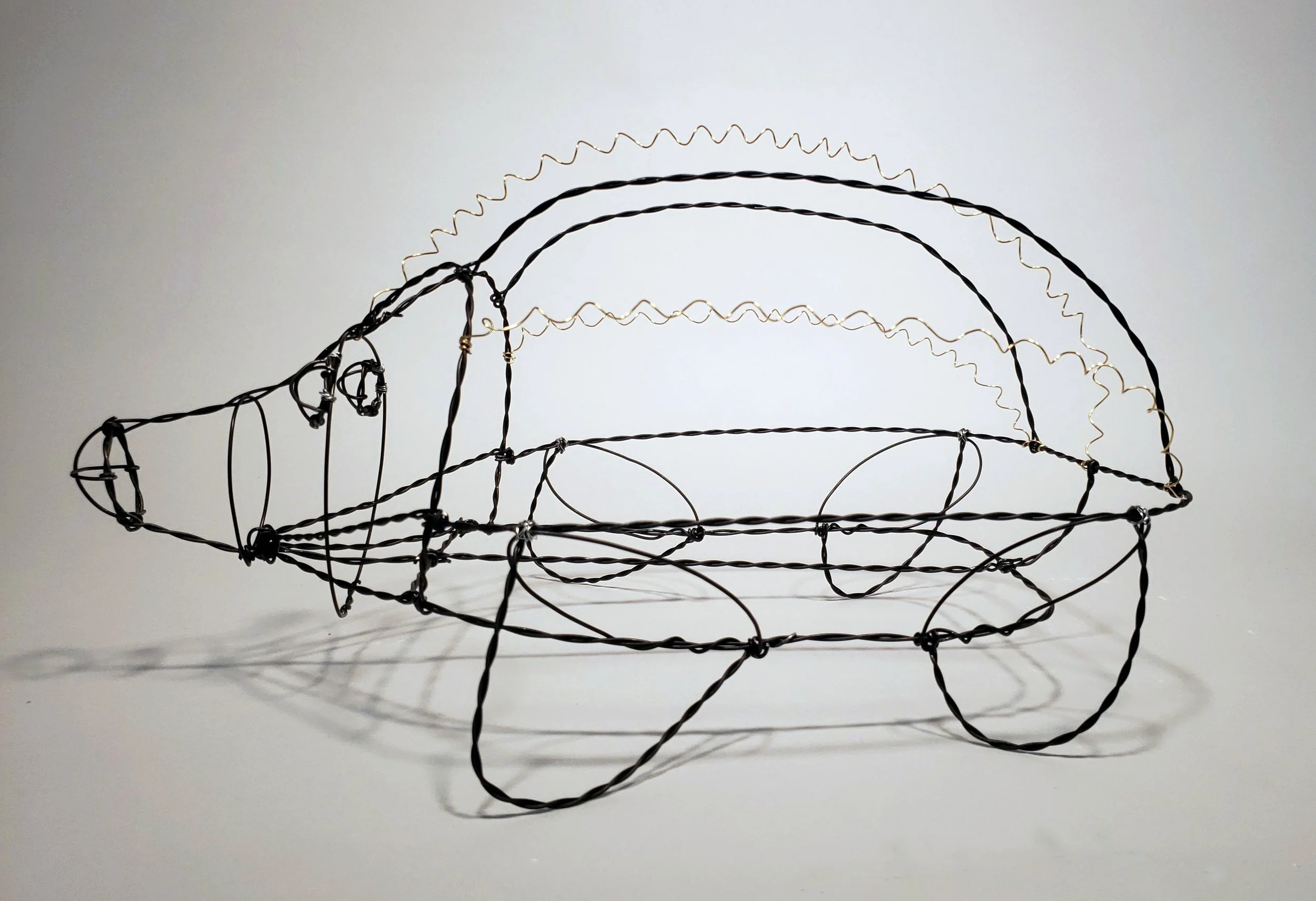
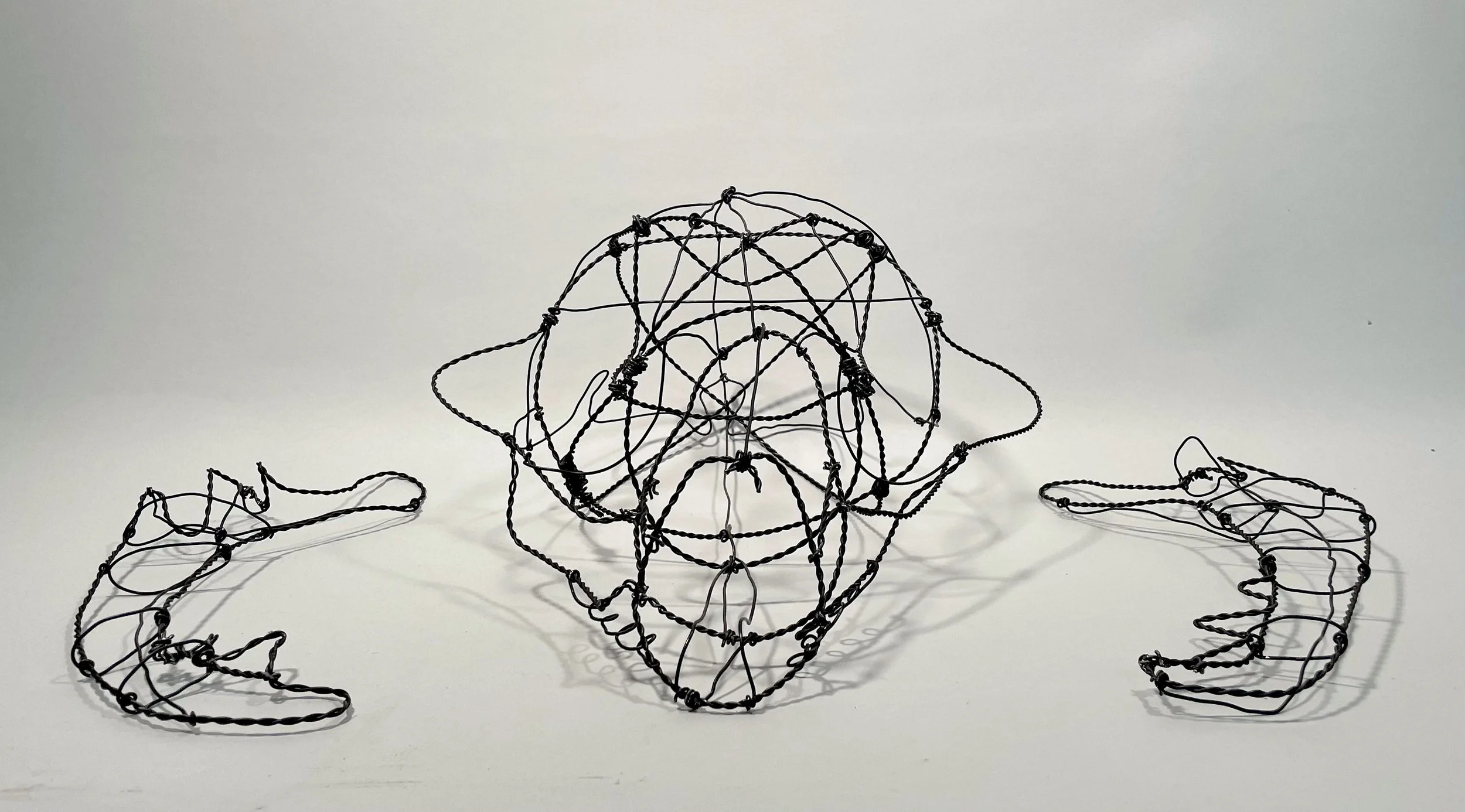
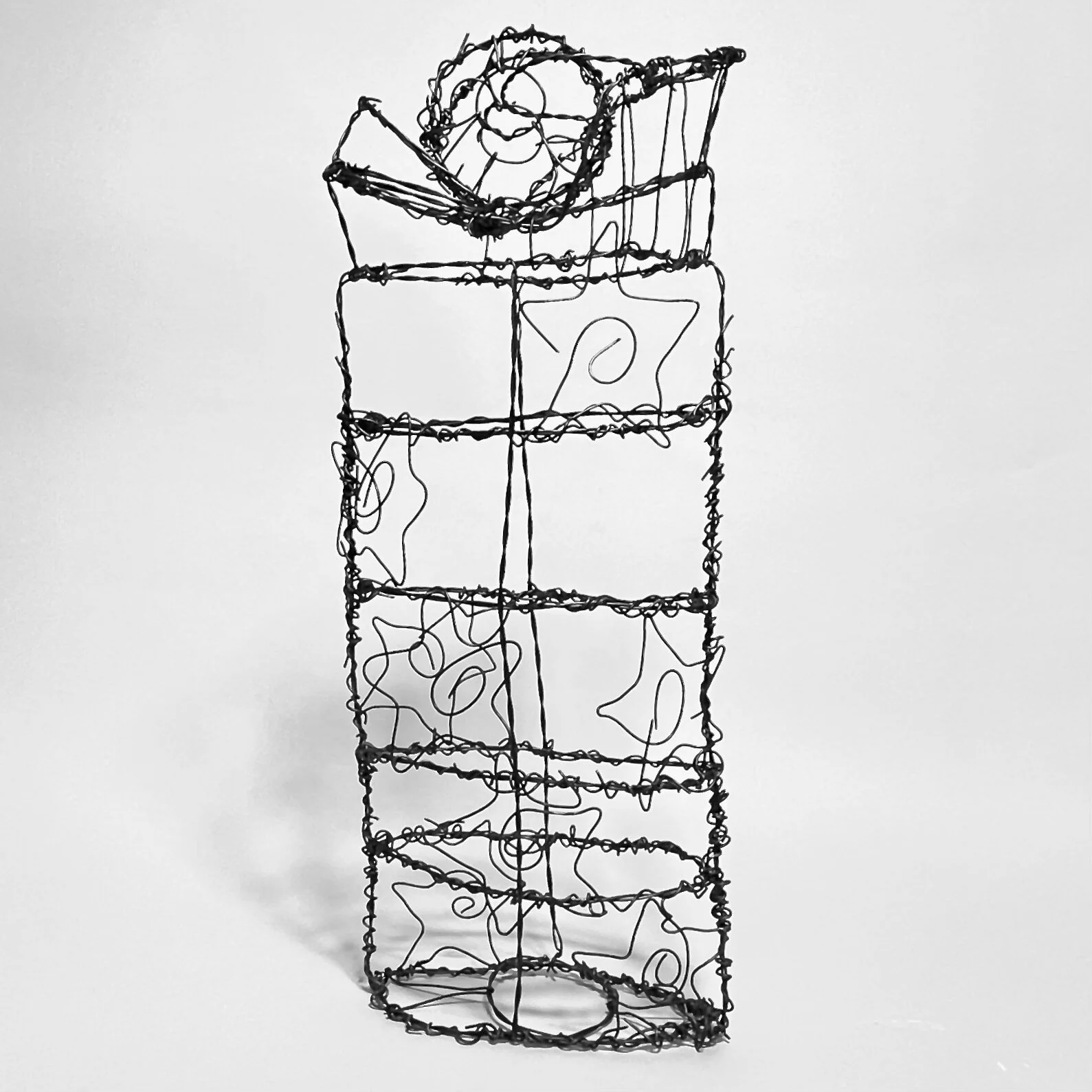
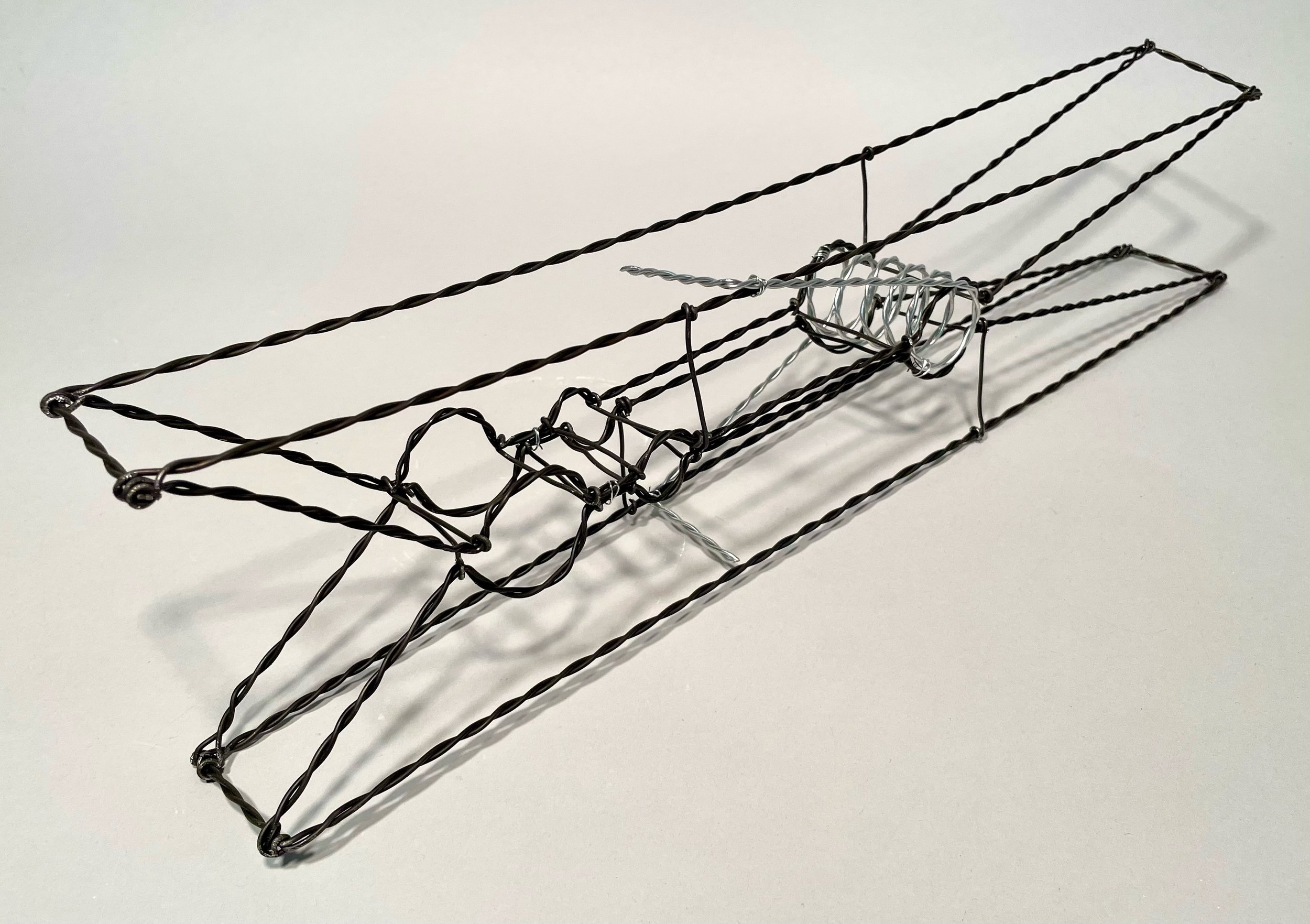
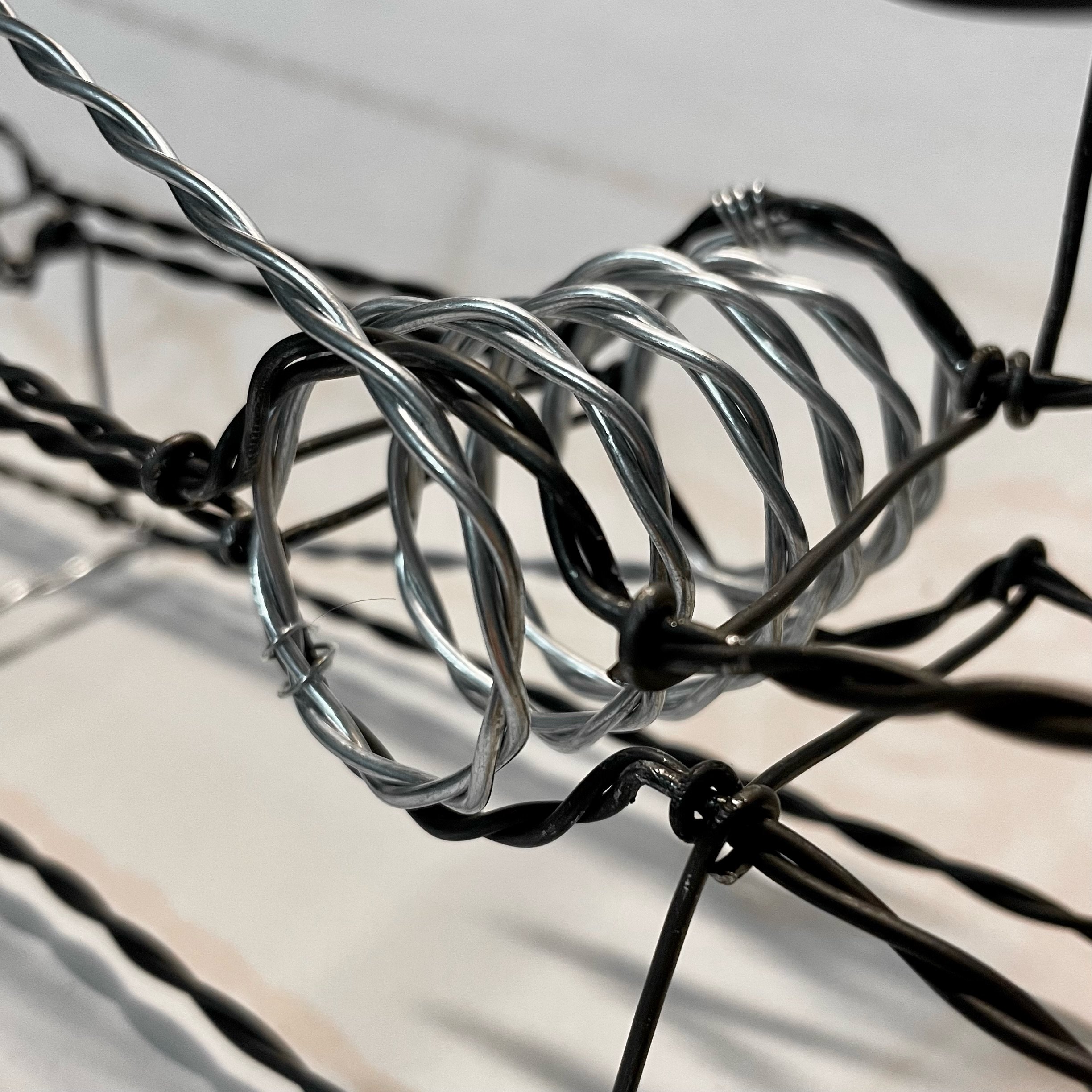
Project Title: Wire Line Sculpture — Translating Drawing into Three-Dimensional Form
This project introduces students to three-dimensional design through the translation of line from two-dimensional drawing into three-dimensional space. Students begin by selecting a small, everyday object to serve as the basis for investigation. Through a series of observational drawings and preliminary sketches, students employ three-dimensional drawing strategies that emphasize the expressive and structural potential of line to articulate form, volume, and spatial relationships.
As the first assignment in the 3D Design course, the wire sculpture project serves as an accessible entry point into sculptural thinking. By working with line—a familiar element from prior drawing experience—students are able to build upon existing visual knowledge while expanding their understanding of how line functions in space. The project reinforces continuity between two-dimensional and three-dimensional practices, easing the transition into volumetric and spatial design.
Following the drawing phase, students carefully measure all dimensions of their selected object and apply proportional scaling methods to enlarge the form. These measurements are used to construct a wire sculpture that reaches a minimum of 24 inches in at least one dimension. Emphasis is placed on accuracy, structural clarity, craftsmanship, and the thoughtful use of negative space.
Through this process, students develop foundational skills in observation, measurement, scale, and fabrication while gaining a deeper understanding of line as both a descriptive and structural element in three-dimensional design.
2D Design
This foundational studio course introduces students to the principles and elements of two-dimensional design as essential tools for organizing visual space. Through a series of structured projects and exercises, students explore line, shape, value, texture, color, balance, rhythm, and hierarchy as formal strategies for visual communication.
The course emphasizes a cross-disciplinary approach, encouraging students to engage with both conceptual development and material experimentation. Students learn to analyze visual problems, develop intentional design strategies, and translate ideas into resolved compositions. Assignments promote creative risk-taking while fostering critical thinking, problem-solving, and technical skill development.
As the semester progresses, students refine their ability to articulate ideas visually and verbally through critique, reflection, and revision. The course supports the development of a personal visual language while establishing a strong foundation for continued study in studio art, design, and related creative disciplines.
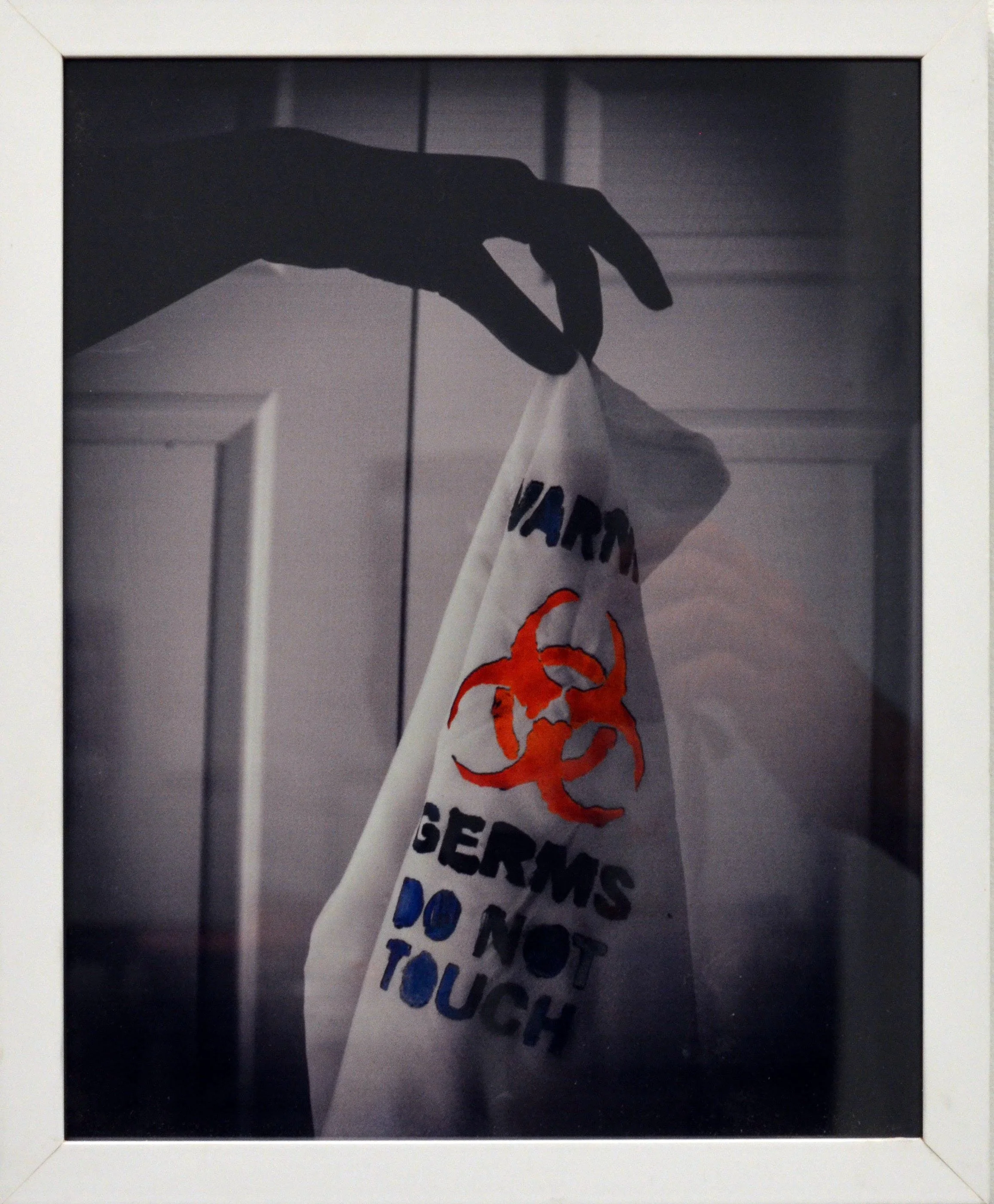
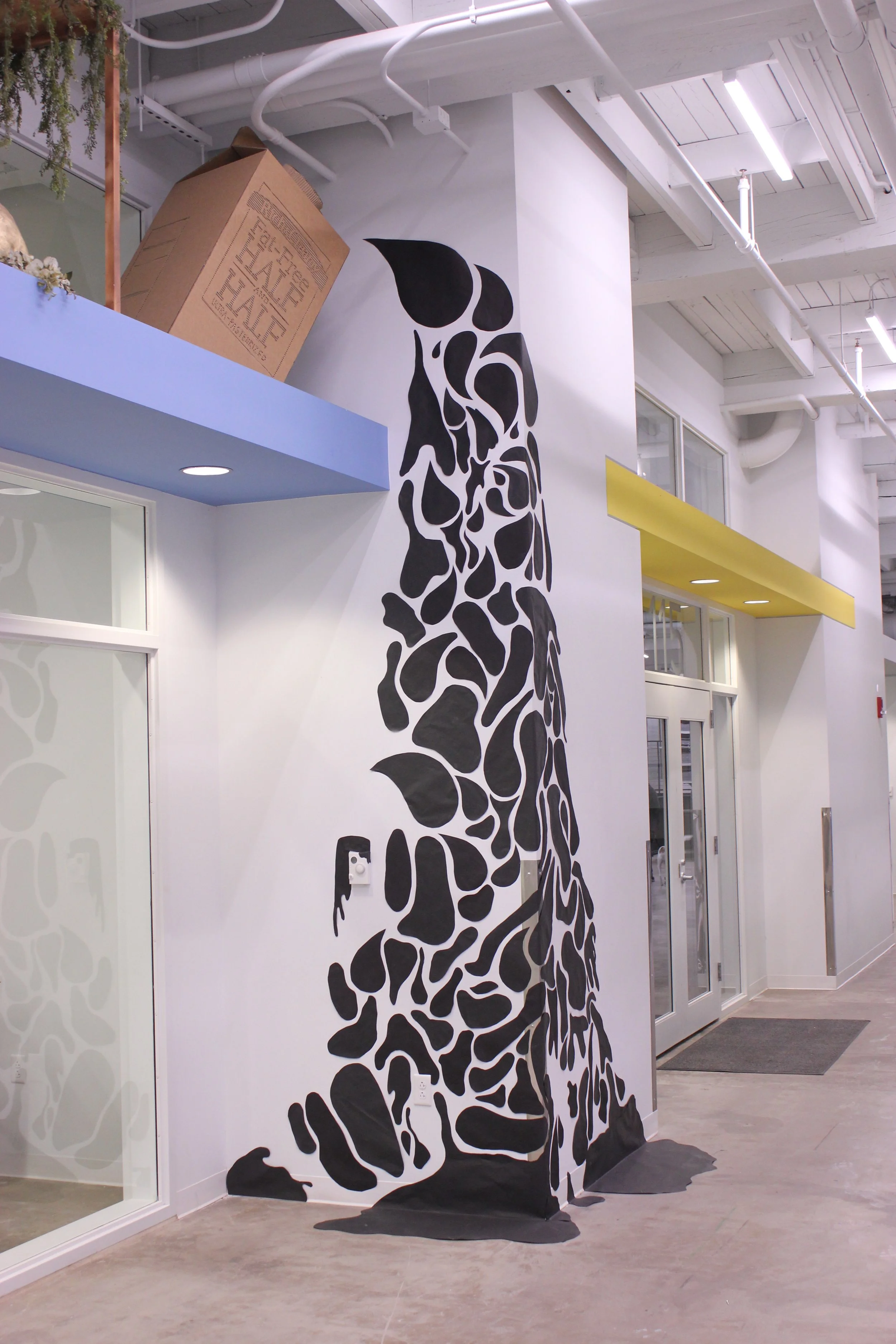
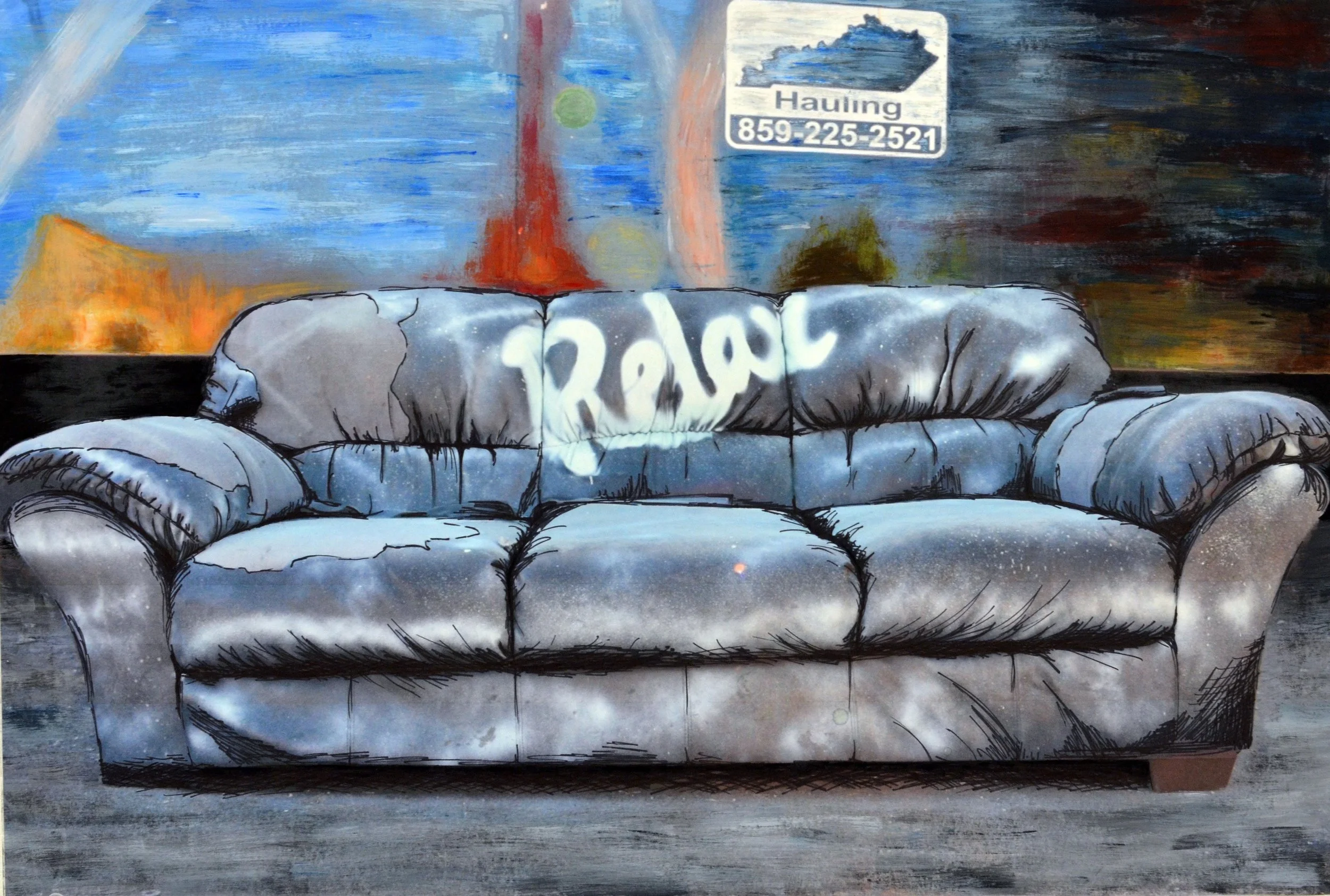
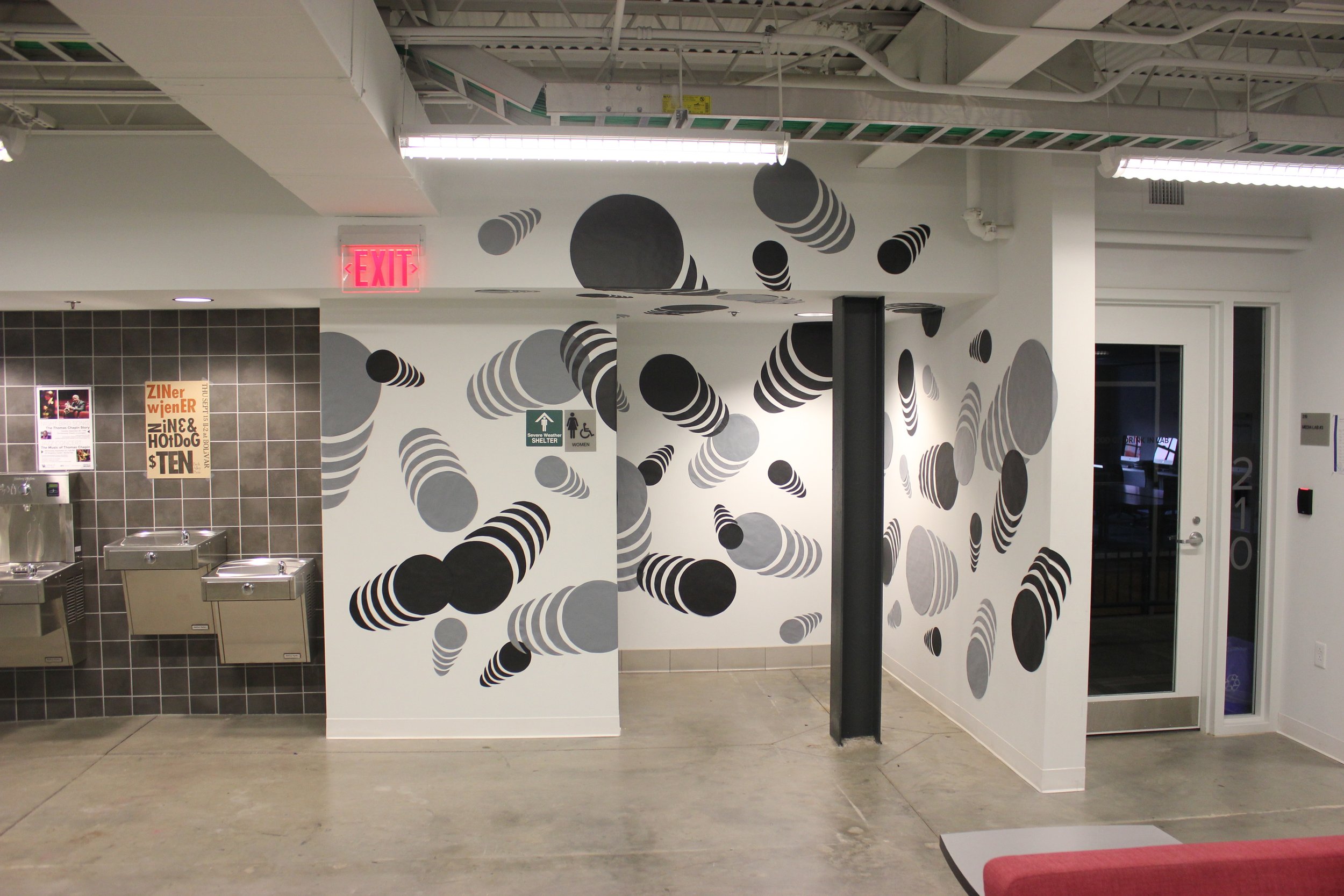
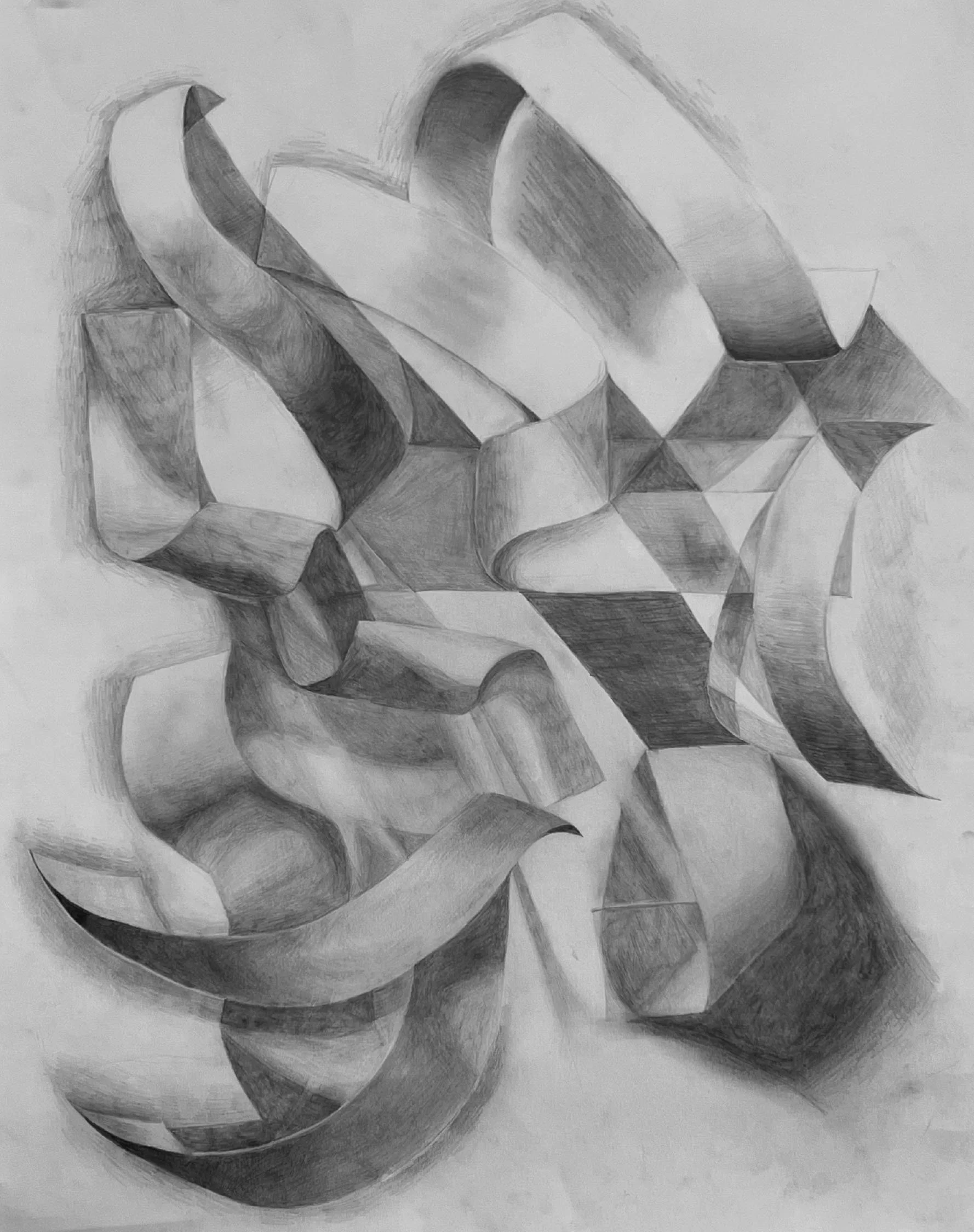
Project Title: Translating Form — From Constructed Object to Observational Drawing
This introductory assignment explores the relationship between three-dimensional form and two-dimensional representation. Students begin by manipulating strips of paper to construct an original three-dimensional composition. Through folding, bending, layering, and interlocking, students investigate how simple materials can generate complex spatial relationships, rhythms, and structural forms.
Once the sculptural form is completed, students shift their focus to close observation. Working directly from the constructed object, students produce a carefully considered drawing that translates the three-dimensional composition into a two-dimensional image. Emphasis is placed on the use of line to describe edges and contours, the development of form through value, and the accurate depiction of spatial relationships.
This project introduces foundational drawing concepts such as proportion, positive and negative space, light and shadow, and compositional organization. Students are encouraged to slow down their looking, refine mark-making, and make deliberate visual decisions based on observation rather than assumption.
Through this process, students develop an understanding of how three-dimensional structures inform two-dimensional imagery, strengthening both perceptual skills and technical control. The assignment serves as an early framework for understanding drawing as a tool for analysis, translation, and visual problem-solving.
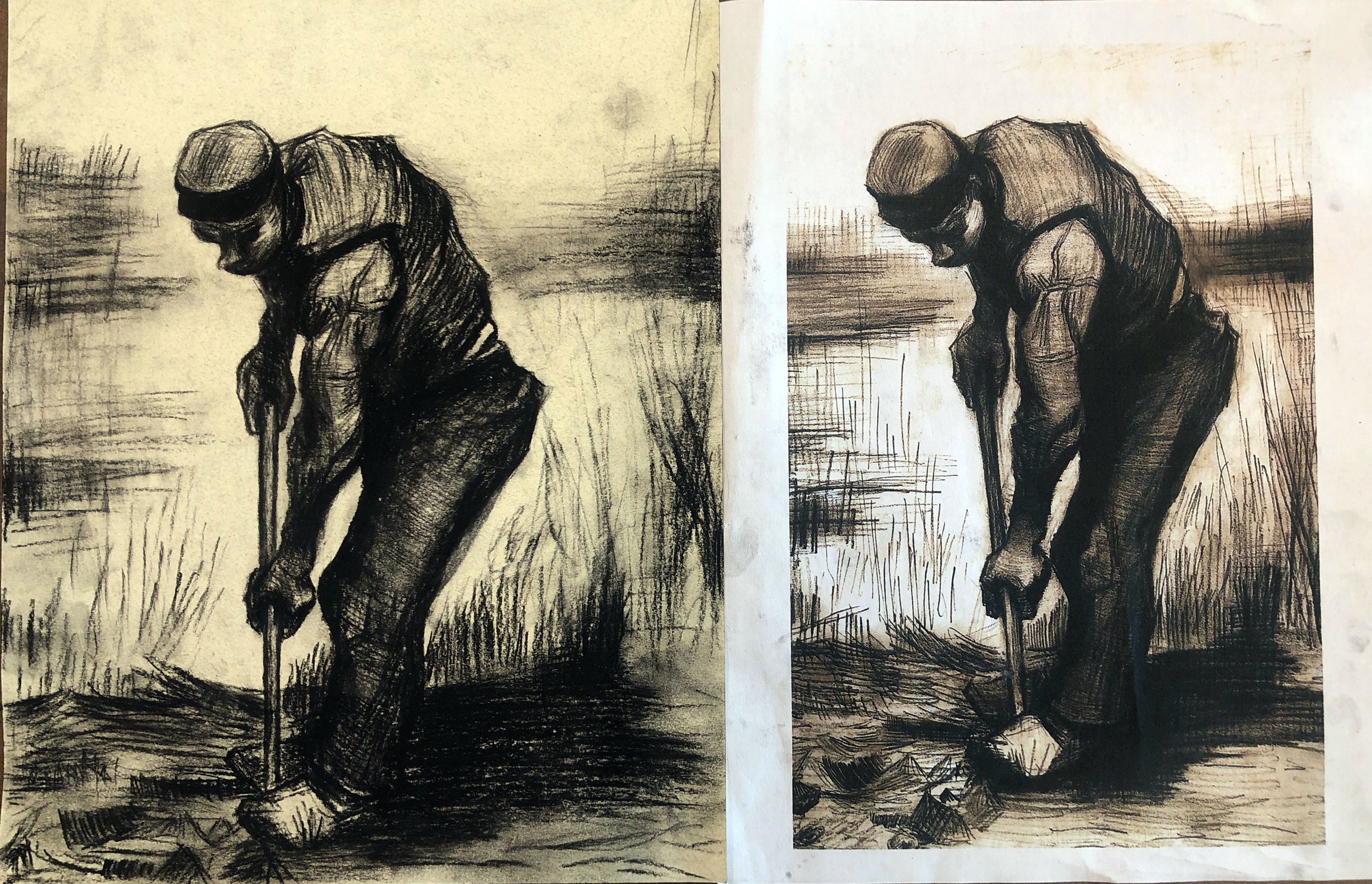
Project Title: Old Master Copy — Learning Through Imitation and Analysis
This assignment introduces students to the practice of copying an Old Master drawing as a means of developing technical skill, visual sensitivity, and historical awareness. Students will select a drawing by a historically significant artist and produce a careful, observational copy using comparable drawing materials.
The purpose of this project is not replication for its own sake, but close analysis. By working through an existing drawing, students examine how line, value, proportion, and composition function together to construct form and convey visual hierarchy. Attention is given to mark-making strategies, edge control, tonal transitions, and the relationship between structure and expression.
Drawing 1: Observational Drawing and Visual Inquiry
This introductory studio course emphasizes the development of strong observational drawing skills through sustained practice, critical looking, and material exploration. Students engage in a range of drawing exercises designed to sharpen perception, strengthen hand–eye coordination, and build confidence in translating three-dimensional subjects into two-dimensional representations.
The course introduces foundational compositional strategies alongside diverse approaches to rendering, mark making, and tonal development. Through experimentation with a variety of drawing media and techniques, students learn how material choices influence visual outcomes and expressive intent. Assignments encourage both technical accuracy and exploratory risk-taking, fostering an understanding of drawing as a process of inquiry rather than solely representation.
Regular critique and reflection support students in articulating visual decisions and evaluating their work within a broader artistic context. By the end of the course, students demonstrate increased control, intentionality, and conceptual awareness in their drawings, establishing a solid foundation for continued study in studio art and related disciplines.
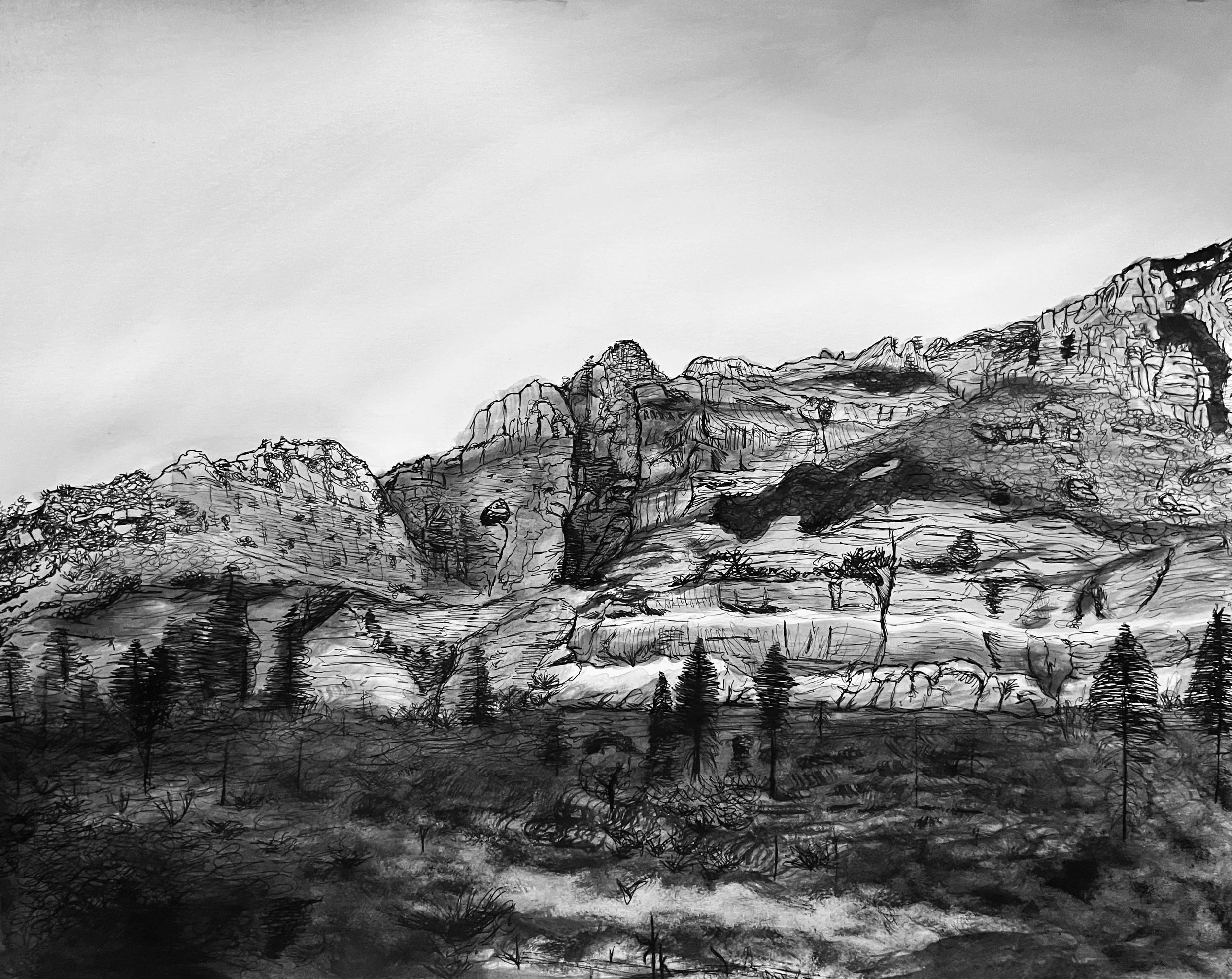
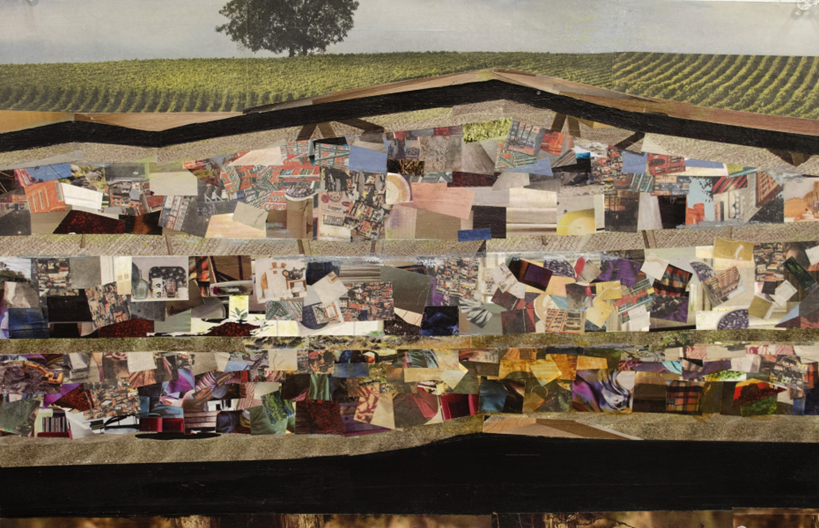
Project Title: Landscape Drawing — Translating Photographic Reference into Observational Space
This assignment introduces students to landscape drawing through the careful translation of photographic reference into a resolved, two-dimensional drawing. Students will work from a selected photograph of a landscape, using it as a visual source while applying observational drawing strategies to interpret space, form, and atmosphere.
The project emphasizes compositional decision-making, including cropping, scale, and focal point, rather than direct mechanical copying. Students are encouraged to analyze the photograph for spatial depth, value structure, and directional movement, using line and value to articulate foreground, middle ground, and background relationships. Attention is given to perspective cues, overlapping forms, and tonal variation as tools for creating a convincing sense of space.
Students will develop the drawing through an initial planning phase that may include thumbnail sketches or value studies, followed by a sustained final rendering. Emphasis is placed on clarity of structure, thoughtful mark-making, and the effective use of contrast to describe light, shadow, and atmospheric depth.
Through this assignment, students strengthen their ability to interpret photographic information critically while maintaining artistic intention and observational rigor. The project reinforces foundational drawing skills and introduces strategies for adapting reference material into expressive and cohesive compositions.